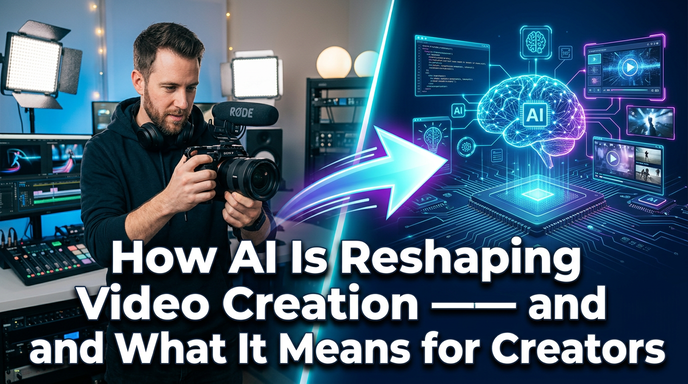
Artificial intelligence is no longer a futuristic concept in the world of video production. It is already embedded in the tools many creators use every day, quietly reshaping how videos are imagined, produced, and distributed. From automated editing to AI-generated visuals, this technological shift is redefining creativity — and opening new opportunities for those who know how to harness it.
AI moves from assistance to creation
For years, video creation required technical expertise, expensive equipment, and long production timelines. Today, AI-powered platforms can generate entire videos from a short text prompt, produce realistic voiceovers, animate digital avatars, and even enhance image quality in real time. What once took hours — or even days — can now be completed in minutes.
These tools rely on machine learning models trained on vast amounts of visual and audio data. As a result, they can identify patterns, understand context, and automate tasks such as scene selection, color correction, subtitle generation, and format optimization for different platforms. The production process becomes faster, smoother, and more accessible.
Lower barriers, broader access
One of the most significant impacts of AI in video creation is the democratization of content production. Creators no longer need advanced editing skills or large budgets to produce professional-looking videos. Independent creators, startups, educators, and small businesses now have access to tools that rival traditional production studios.
This shift is particularly visible on social media platforms, where speed and consistency matter. AI enables creators to publish more frequently, adapt content to multiple formats, and respond quickly to trends — all without sacrificing quality.
Productivity without sacrificing creativity
Contrary to common fears, AI is not replacing human creativity — it is amplifying it. By automating repetitive and technical tasks, AI allows creators to focus on storytelling, concept development, and audience engagement. The creative process becomes less about execution and more about vision.
AI-driven analytics also play a growing role. By analyzing viewer behavior, engagement rates, and performance metrics, these systems help creators better understand their audience. This data-driven insight enables more informed creative decisions and more relevant content.
New revenue models emerge
The integration of AI into video production is also reshaping how creators monetize their work. Personalized videos at scale, automated marketing content, multilingual versions of the same video, and rapid content localization are becoming viable revenue streams.
Brands are increasingly turning to creators who can deliver high-quality content quickly and efficiently. Those who adopt AI tools early gain a competitive edge, offering faster turnaround times and more adaptable production workflows.
A creative industry in transition
As AI continues to evolve, its role in video creation will only expand. Ethical considerations, originality, and transparency will remain important discussions, but the direction is clear: AI is becoming an essential part of the creative toolkit.
For creators willing to embrace these tools thoughtfully, artificial intelligence represents not a threat, but a powerful ally. In a digital landscape defined by speed, relevance, and innovation, AI may well be the key to staying ahead.